

PROJECT PLANNING
An industrial rigging quote can only be as clear as the project information behind it. A machine weight and two addresses may be enough to start a conversation, but they rarely define the crew, equipment, access plan, trade coordination, or schedule required to complete the work.
That does not mean a facility team must engineer the move before contacting a contractor. It means the contractor should receive enough reliable information to identify assumptions, ask useful questions, and determine what needs to be verified during a site visit.
Use this industrial rigging quote checklist to organize the details before requesting an estimate.
Start With the Equipment Information
Create an equipment list even if the project involves only one machine. For every asset, provide the best available version of the following:
- Manufacturer, model, serial number, and equipment type
- Overall length, width, and height
- Operating weight and shipping weight, when both are available
- Center-of-gravity information and designated lifting points from the manufacturer
- Current condition, including whether the equipment is operating, idle, partially disassembled, or already crated
- Components that must be removed or secured before the move
- OEM manuals, dimensional drawings, foundation plans, and shipping documents
Do not estimate a weight from appearance. If a reliable weight is unavailable, identify that gap so the rigging contractor can recommend an appropriate verification step. Also note fluids, tooling, product, or attachments that may change the machine’s moving weight or balance.
Document the Starting and Final Positions
“Move the machine across the plant” can describe many different scopes. Photos and marked-up floor plans should show the current orientation, the desired final orientation, and the working space around both positions.
Record details that affect how the equipment can be lifted, skidded, turned, or set:
- Floor elevations, pits, curbs, housekeeping pads, and changes in level
- Columns, guardrails, conveyors, piping, ductwork, and nearby operating equipment
- Ceiling height and overhead obstructions
- Floor openings, expansion joints, or areas with documented load restrictions
- Final anchoring, leveling, alignment, and tolerance requirements
If the destination is not ready, state what is still under construction and who is responsible for confirming readiness. A preliminary quote can include assumptions, but those assumptions should be visible.
Map the Entire Move Route
The equipment footprint is only part of the access question. Measure the full route from the original position to the truck and from the delivery point to the final foundation.
Useful route information includes:
- Clear door width and height—not just the nominal door size
- Aisle widths, tight turns, slopes, ramps, and surface transitions
- Dock height, yard access, trailer approach, and available setup area
- Overhead doors, canopies, power lines, sprinklers, lighting, and pipe racks
- Temporary removals that may be needed, such as doors, fencing, rails, or building panels
- Traffic, production, pedestrian, and security restrictions along the route
A video walkthrough can supplement drawings, but it should not replace verified measurements. For complex machine moving projects, an on-site route review may be necessary before the contractor can finalize the plan.
Define the Contractor and Trade Boundaries
Many scope gaps occur between “disconnect” and “ready to run.” Identify who is responsible for each handoff rather than assuming it is included.
The responsibility list may include:
- Production shutdown and hazardous-energy control
- Electrical, pneumatic, hydraulic, gas, water, steam, exhaust, and process-line disconnection
- Mechanical disassembly, guarding removal, and component labeling
- Rigging, loading, hauling, unloading, and final placement
- Foundation preparation, anchoring, grouting, leveling, and alignment
- Utility reconnection, controls work, OEM support, calibration, and commissioning
- Permits, escorts, traffic control, security clearance, and site orientation
Facility teams should follow their site-specific safety programs and applicable requirements. OSHA’s control of hazardous energy standard is an important reference when servicing or maintenance work could expose employees to unexpected energization or stored energy.
Share the Real Schedule and Operating Constraints
Provide more than a requested completion date. A workable schedule should identify when the equipment becomes available, when the destination is ready, and which activities must occur inside a shutdown or restricted-access window.
Tell the contractor about:
- Normal shifts and allowable work hours
- Planned shutdown dates and firm restart deadlines
- Blackout periods, production peaks, sanitation windows, or customer commitments
- Required orientations, background checks, badging, escorts, or work permits
- Shared docks, cranes, laydown areas, or access routes
- Other trades working in the same area
If dates are still tentative, label them that way. It is better to price a known scheduling assumption than to present a flexible date that is actually fixed.
Send a Useful Visual Package
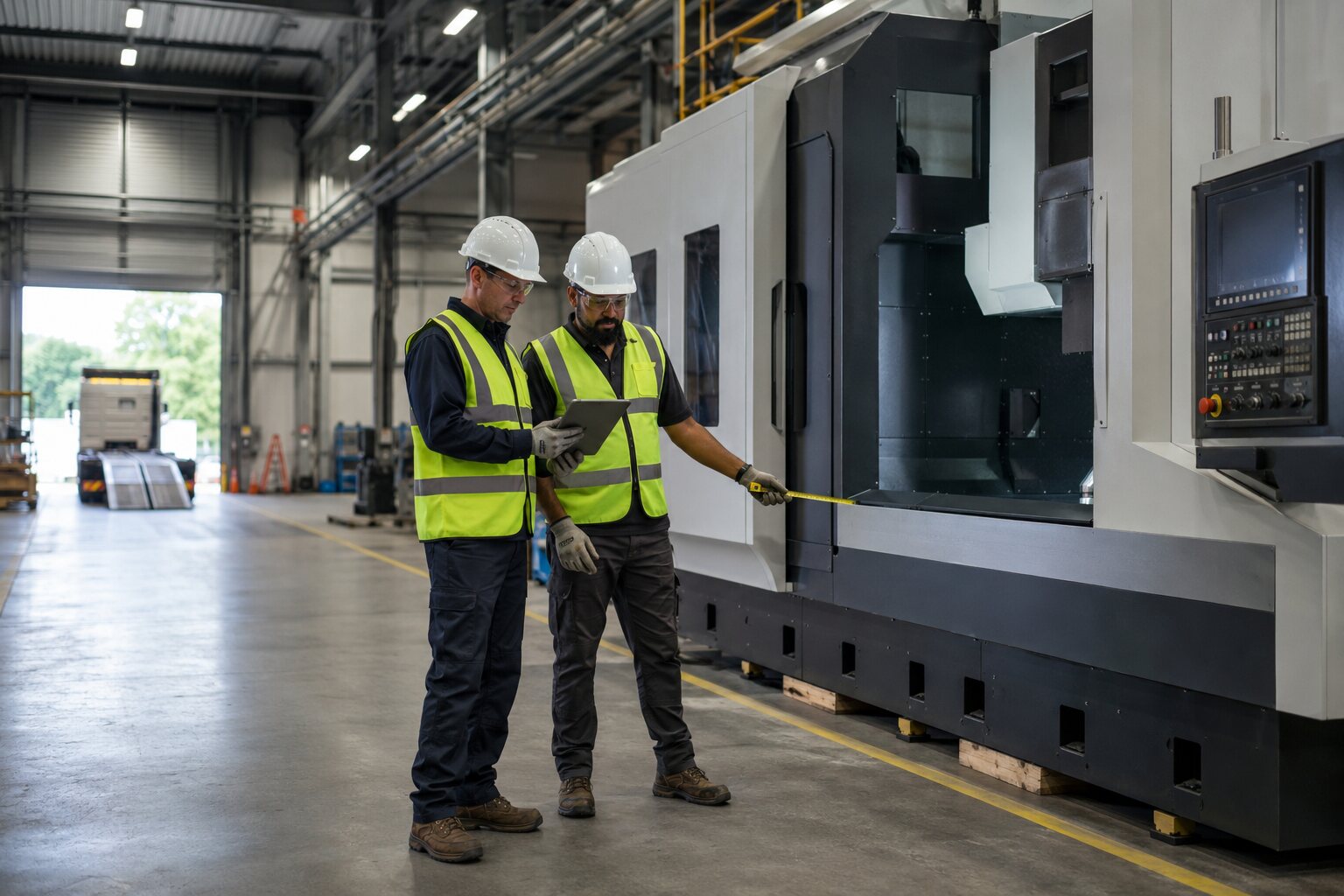
A strong request for quote usually includes a floor plan, equipment drawings, route photos, and wide images of the origin and destination. Add scale by including recognizable doorways or a tape measure, but do not rely on perspective to establish clearance.
Name files clearly and group them by asset or location. On photos or drawings, mark:
- The machine to be moved
- Travel direction and turning points
- Overhead and side-clearance concerns
- Loading and unloading positions
- The intended final orientation
Treat the Site Visit as Scope Development
Documents help a contractor prepare, but a site visit allows the team to confirm measurements, access, working conditions, and responsibilities. Keep facility operations, maintenance, engineering, construction, safety, and procurement represented as needed so questions can be resolved by the people who own each decision.
RigX provides industrial rigging, hauling, installation, and related services for equipment projects across Atlanta and the Southeast. If you are preparing a move, send the available equipment information, photos, locations, and target dates through the RigX contact page. The team can help identify what still needs to be verified before the scope is finalized.
Contact us
Please fill out the form below.