

MILLWRIGHTING & RIGGING SERVICES
Millwright vs Rigger: When You Need Each Service
When a facility manager calls to schedule equipment work, the first question is often: “Do I need a millwright or a rigger?” It’s the right question to ask — and the answer directly affects your project scope, timeline, and cost. These two trades overlap in practice but serve fundamentally different functions. Knowing which one your project requires — or whether you need both — is the difference between a smooth installation and an expensive course correction.
What Each Trade Actually Does
A millwright is a precision tradesperson. Their work begins after the equipment arrives on the floor: installation, alignment, calibration, and commissioning. If a machine needs to be bolted to a foundation, leveled to within thousandths of an inch, or coupled to a drive system, that’s millwright work. Millwrights also handle mechanical troubleshooting, preventive maintenance, and the technical aspects of equipment qualification — the kind of documentation that matters in regulated industries.
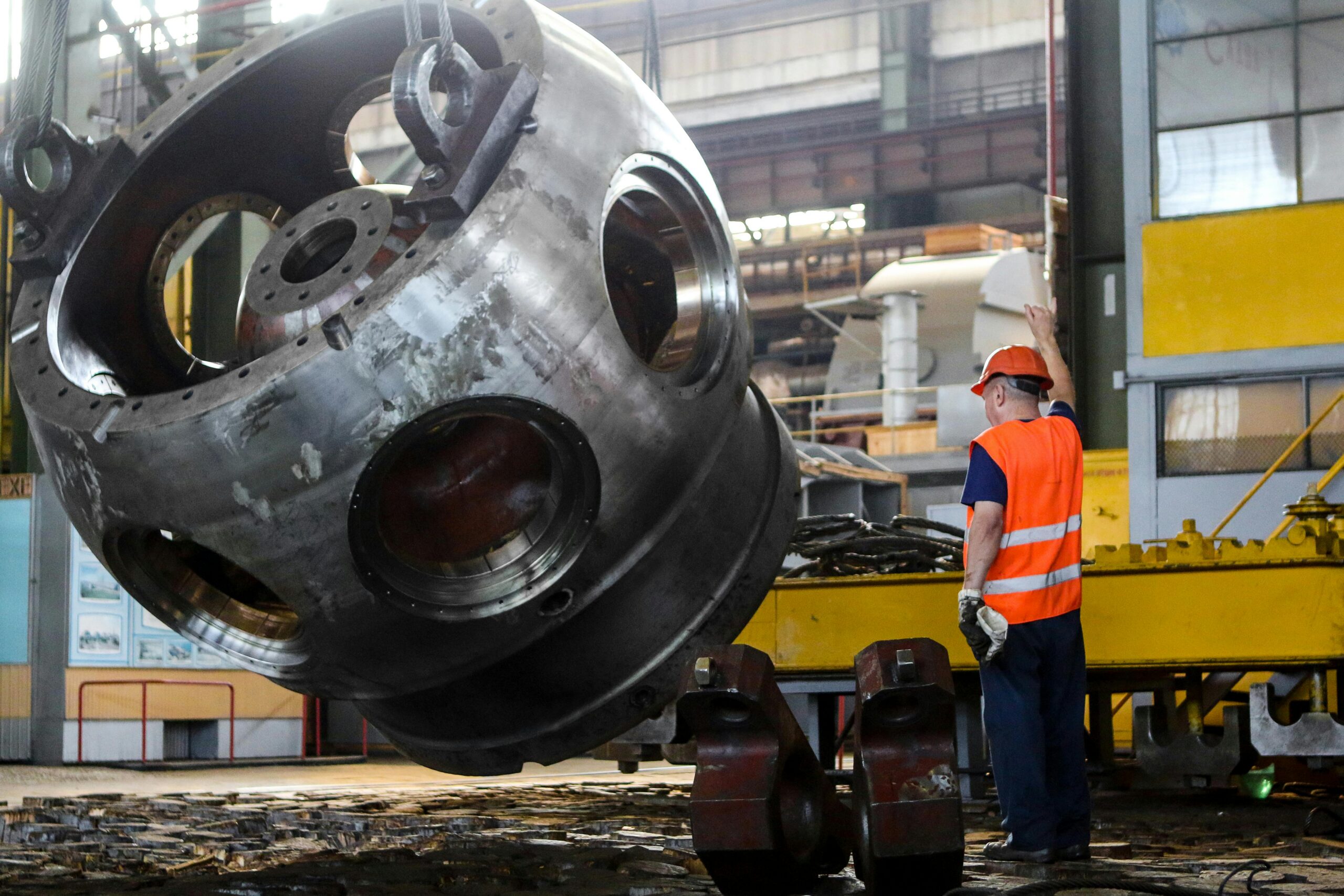
A rigger moves things. Their expertise is in load calculation, rigging hardware, lifting equipment, and the controlled movement of heavy machinery through complex environments. Rigging work happens before the millwright steps in — getting a 40-ton press off a flatbed, through a facility, and positioned at its foundation requires a completely different skillset than installing it.
When You Need Both — and Why That Matters
Most industrial equipment projects require both trades in sequence. A machine moving project, for example, starts with rigging — disconnecting, lifting, and transporting the equipment — and ends with millwright work to reinstall and recommission it at the new location. Plant relocations follow the same pattern at a larger scale: riggers handle the physical movement of every asset while millwrights manage installation sequencing and mechanical commissioning at the destination.
The risk of treating these as interchangeable is real. Facilities that hire riggers expecting millwright-level precision end up with misaligned equipment. Those that skip riggers on a complex lift create unnecessary safety exposure. Using a contractor who can execute both trades under a single project plan eliminates the coordination gap — and protects the production schedule.
RigX crews are certified in both disciplines, with staging and storage capacity to sequence multi-phase projects without bottlenecks. Whether your project requires rigging only, millwright services only, or both in combination, the work is planned and executed as a single coordinated scope. Contact us to discuss the specifics of your next equipment project.
Contact us
Please fill out the form below.